The Cost of Sustainability Reporting After the Omnibus: What Actually Got Cheaper
The revised ESRS should cut reporting costs by over 30% per company. Which parts of the bill that reaches, which it misses, and why SSBJ filers see none.
Einblicke in Nachhaltigkeit, ESG-Compliance und Impact-Recruiting
The revised ESRS should cut reporting costs by over 30% per company. Which parts of the bill that reaches, which it misses, and why SSBJ filers see none.
A Japanese group filing both CSRD and SSBJ needs four things from a platform. Here is what Workiva, Persefoni, Watershed and Socious Report each publicly state.
The ISSB's December 2025 amendments to IFRS S2 let financial institutions limit Scope 3 Category 15 to financed emissions — loans, bonds, equity, undrawn commitments and assets under management. That is most companies with a bank. Here is what your lender will ask for, why the data quality score decides how hard they push, and what to have ready.
China's three stock exchanges made sustainability reporting mandatory for constituents of four indices and for dual-listed companies, with the first reports covering 2025 due by 30 April 2026. Above that sits the Ministry of Finance's CSDS framework, which is scheduled to become a unified national system by 2030. Most Japanese companies meet it as suppliers first.
The IFRS S1 and S2 transition reliefs — climate-only reporting, no comparatives, no Scope 3, a later filing date — are available in the first annual reporting period only. Year two removes all of them together. Here is what changes, and what the December 2025 amendments to IFRS S2 do and do not soften.
SASB/ED/2026/1 proposes amendments to IFRS S2 industry guidance. Key cost: new data fields you're not collecting.
Under IFRS S1 and the SSBJ Universal Standard, sustainability disclosures cover the same reporting entity as the financial statements. Most Japanese ESG reports use an operational-control boundary instead. Here is where the two lists diverge.
On 21 July 2026 the ISSB approved balloting an exposure draft of an IFRS Practice Statement on nature-related disclosures — supplementing IFRS S1 and S2 rather than amending them. That choice changes what SSBJ and CSRD filers actually have to do.
On 8 July 2026 Korea's FSC set mandatory ESG disclosure at KRW 10 trillion in assets from 2028, falling to KRW 5 trillion in 2029. That is 291 companies, then 3,171.
Most boards treat SSBJ governance as an org-chart task. The standard asks for something narrower — and the FSA will audit it.
IFRS S2's Scope 3 relief covers only the first SSBJ reporting year. SSBJ plans to adopt it as-is, making FY2027 the year the Scope 3 data system has to get built.
SSBJ requires companies to model climate impacts across conditions beyond their control. Sounds procedural. Requires quantified financial projections.
Three companies are already selling AI tools for Japan's SSBJ and CSRD reporting — benchmarking for issuers, scoring for investors, AI evaluation for disclosure.
CSRD/Taxonomy KPIs, EUDR geolocation, CSDDD due diligence, and CBAM embedded emissions all draw on the same supplier facts — legal basis, granularity, and deadlines differ. How to collect once and map four ways.
Japan's FSA schedules mandatory SSBJ assurance a year after mandatory disclosure, and scopes it to governance, risk management, and Scope 1-2 only. Both facts change when the real work has to start.
Regulation (EU) 2025/2650 pushed EUDR application to 30 December 2026. It left the 31 December 2020 deforestation cut-off exactly where it was — which makes the evidence you have to hold longer, not shorter.
Directive 2026/470 repealed CSDDD's obligation to adopt a climate transition plan. But ESRS E1 disclosure under CSRD remains mandatory.
The EU carbon border levy has applied in full since 1 January 2026, but no certificate can be bought until February 2027 and no declaration is due until September 2027. What you collect in 2026 decides that filing.

EFRAG published the ESRS XBRL taxonomy in August 2024, but tagging only becomes mandatory once the Commission adopts it into the ESEF rules. Here is what that gap actually costs a reporting team.
On 3 July 2026 the Commission adopted the Voluntary Standard. Undertakings with 1,000 employees or fewer now have a statutory right to refuse sustainability questions that go beyond it and the company asking has to tell them so.
ESRS G1 requires governance, political contributions, lobbying, payment terms. Most don't fit traditional ESG platforms.
The revised ESRS S4 asks what you did when protecting the people who use your product collided with marketing, sales and data use. That answer does not live in an ESG platform.
The revised ESRS S3 folds five disclosure requirements into four and leaves most of them conditional. It also adds one your ESG system cannot produce: substantiated human rights incidents.
ESRS S2 covers labor rights and human rights in your value chain. Learn what the standard requires, how it works, and what changed in 2026.
The law's own arc: adoption 2022, ESRS 2023, 2024 transposition deadline, 2025 stop-the-clock, 2026 Omnibus contraction.
A step-by-step CSRD implementation checklist for Japanese groups with EU operations — seven phases, each with an owner, a decision gate, and the artifact it has to produce before the next phase can start.
ESRS E5 covers resource inflows, outflows and waste under CSRD. What each disclosure requirement asks for, what the July 2026 revision cut, and why a shorter standard is not a lighter data problem.
Japanese groups with European subsidiaries now report under SSBJ and CSRD at once. Where the two rulebooks overlap, where they genuinely diverge, and how to build the dataset once instead of twice.
European Commission adopted the revised ESRS on July 3, 2026: mandatory datapoints cut 61%, total datapoints down 70%, effective FY2027. What changed and how to remap your data.


How to evaluate AI sustainability reporting software in 2026: a vendor-neutral, audit-ready checklist covering data lineage, CSRD, SSBJ and ISSB mapping.
A practical guide to ESRS E2 under CSRD — pollutant emissions, substances of very high concern, microplastics, and the financial effects of pollution. What auditors expect in 2026 reports.
ESRS E3 was renamed and pared back under the Omnibus simplification — but mandatory water disclosures got sharper. Here's what 2026 CSRD reporters must disclose.
How banks, asset managers, and insurers should approach CSRD reporting after the Omnibus discontinued sector-specific ESRS. Financed emissions, PCAF, and SFDR interoperability.
Prepare workforce data for the 17 ESRS S1 disclosure requirements and the 2026 phase-in rules.
CSRD tools for Asia-Pacific companies. Covers SSBJ, AASB S2, HKEX, SGX for Tokyo, Singapore, Sydney, Hong Kong.
ISSB is the global baseline for investor-focused sustainability disclosure. What IFRS S1/S2 require, mandatory in 2026, and how it differs from ESRS, GRI, and TCFD.
A practical guide to ESRS E1 under CSRD — transition plans, scenario analysis, GHG emissions, energy mix, and financial effects. What auditors expect and how to deliver.
The EU Omnibus directive took effect 18 March 2026, narrowing CSRD to companies with 1,000+ employees and €450M+ turnover. Here's what changed.
Calculate the three EU Taxonomy KPIs and check eligibility, alignment, DNSH, and the 2026 Omnibus changes.
The EU Green Claims Directive turned greenwashing into a compliance problem. You need evidence, third-party verification, and face 4% revenue penalties. This is how to comply.
Guide to the EU Digital Product Passport: timeline, affected industries, data requirements, blockchain role, and connections to CSRD and supply chain obligations.
From ICO speculation to impact DAOs, blockchain treasuries are evolving into powerful funding mechanisms for social good. How on-chain transparency and community governance are reshaping impact finance in 2026.
A step-by-step guide to conducting a CSRD gap analysis — covering ESRS mapping, double materiality assessment, data collection readiness, governance structure review, and a practical checklist for identifying and closing compliance gaps.
Compare leading platforms: CSRD/ISSB compliance, AI automation, pricing, and fit for European and Japanese enterprises.
A comprehensive guide to impact measurement for enterprises — covering leading frameworks (IMP, IRIS+, SDG Impact Standards), how to start measuring impact, the connection to sustainability reporting and double materiality, and the role of AI and automation.
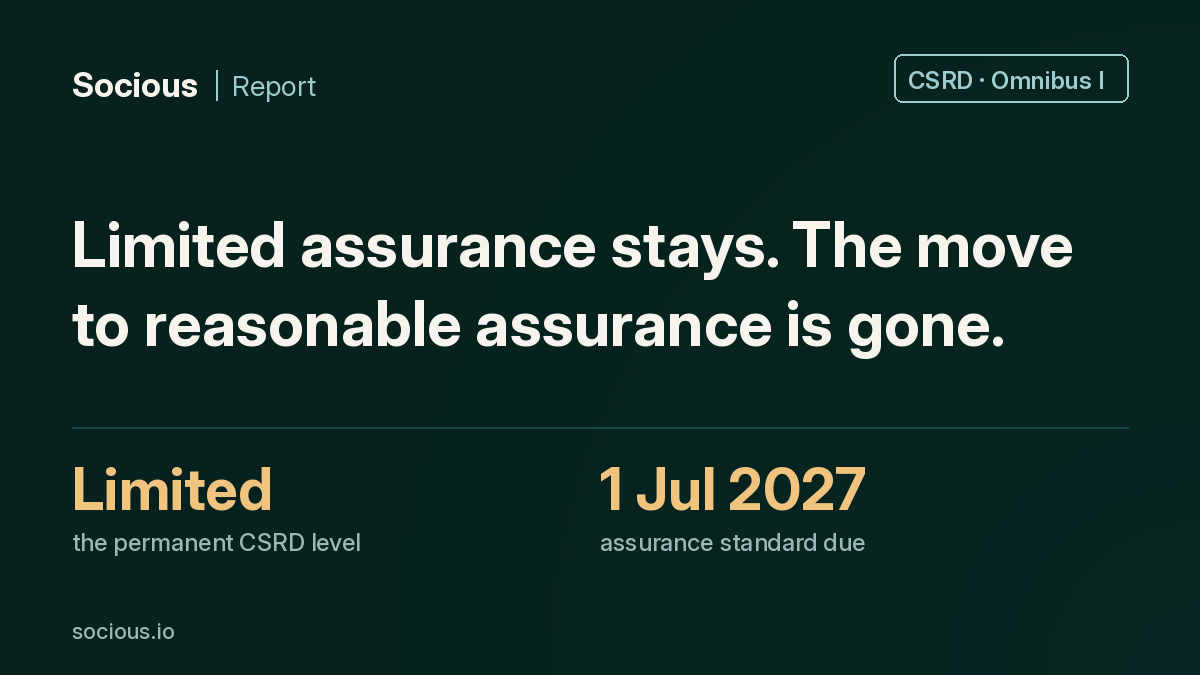
Understand the difference between limited and reasonable assurance under CSRD, the transition timeline, who can provide assurance, and how to prepare your sustainability report for independent verification.
Mandatory ESG disclosures across Asia-Pacific: Japan SSBJ, Australia, Singapore, Hong Kong, Korea, India. Country-by-country deadlines.
Master Scope 3 emissions under CSRD: all 15 GHG categories, ESRS E1 requirements, and practical steps from screening to AI-powered reporting.
A practical guide to building your sustainability reporting team — the key roles you need, the skills to hire for, where to find qualified candidates, and how AI tools are reshaping team structures and headcount requirements.
GRI, ISSB, and ESRS differ on materiality and scope. This guide shows where they diverge and how to comply with multiple frameworks.
What is SSBJ? Japan's sustainability disclosure standard for listed companies. FY2027 timeline, ISSB/CSRD alignment, Scope 3 emissions, compliance checklist.
Delayed materiality assessments, missed XBRL deadlines, and three other costly CSRD errors enterprises keep hitting.
ISSB adoption status by country: Japan, Australia, UK, Singapore, Hong Kong, Canada, Brazil. Which jurisdictions mandate IFRS S1/S2?
Japan's mandatory emissions trading covers 300-400 companies (60% of emissions). This drives demand for carbon accounting, blockchain verification, and AI monitoring.
How verifiable credentials and blockchain technology solve ESG data verification challenges — reducing greenwashing risk, cutting audit costs, and creating tamper-proof compliance trails.
A step-by-step guide to mapping ESRS datapoints for CSRD compliance. Learn how to navigate 1,100+ disclosure requirements, prioritize mandatory datapoints, and streamline your first sustainability report.
Sustainability reporting costs €500K–€2M+ in year one. See where the money goes and how AI can cut the bill.
Find the CSRD deadline that applies to your company and when your sustainability team needs to start preparing.
Discover how AI automates sustainability reporting — cutting CSRD preparation time by up to 70%, improving data accuracy, and producing audit-ready ESG disclosures.
Run a CSRD double materiality assessment in six steps, from identifying IROs to scoring the results.
An educational deep dive into how AI transforms raw sustainability data from CSVs, PDFs, and spreadsheets into structured ESRS-compliant disclosures with full audit trails.
A comprehensive guide to the EU Corporate Sustainability Due Diligence Directive (CSDDD), its timeline, scope, interaction with CSRD, and practical compliance steps for supply chain teams.
Prepare an ESRS E4 biodiversity report, assess materiality, and align it with TNFD.
A comprehensive guide to the fastest-growing sustainability and impact careers in 2026, including salary ranges, required skills, career transition advice, and where to find opportunities.
How the SSBJ mandate is driving Japanese enterprises to adopt AI for ESG compliance, automating ESRS, SSBJ, and GRI reporting at scale.
Japan's FSA made SSBJ disclosure mandatory in February 2026. How SSBJ aligns with and diverges from IFRS S1/S2, and what TSE Prime-listed companies need to know.
A data-driven analysis of the return on investment from sustainability reporting, covering cost of capital, investor preference, brand value, risk reduction, and operational efficiency.
A practical transition guide for companies moving from TCFD-aligned climate disclosures to ISSB IFRS S2, including mapping, timelines, and a compliance checklist.
An overview of how Socious Verify uses W3C Verifiable Credentials to help universities issue tamper-proof digital diplomas, combating fraud and streamlining verification.
Find Tokyo conferences, meetups, accelerators, and sustainability groups for English-speaking professionals.
As we enter 2026, the Cardano ecosystem is reaching a historic turning point with the mainnet launch of Midnight, its highly anticipated privacy-focused partner chain.
Stake your ADA with the THANK Pool ISPO to support global impact projects -- without selling -- while earning SOCIO tokens and staying in control.
Explore how blockchain technology and no-code platforms are transforming credential verification, streamlining authentication while protecting user privacy through advanced cryptographic methods.
Socious Work's free, AI-powered hiring platform eliminates recruitment fees while enabling values-based candidate matching, driving diversity, cutting costs, and improving retention for mission-driven organizations.
A comprehensive guide for Cardano users to claim their SOCIO tokens through the DripDropz platform in simple, easy-to-follow steps.
A celebration of technology solving social issues -- the Tech for Impact Summit 2024 at Shibuya Hikarie Hall brought together startups, investors, corporations, and government entities.
On Friday, November 8, innovators from around the world gathered for the Catalyst Fund13 International Proposal Pitch Event on Zoom, bringing their ideas directly to the Japanese community.
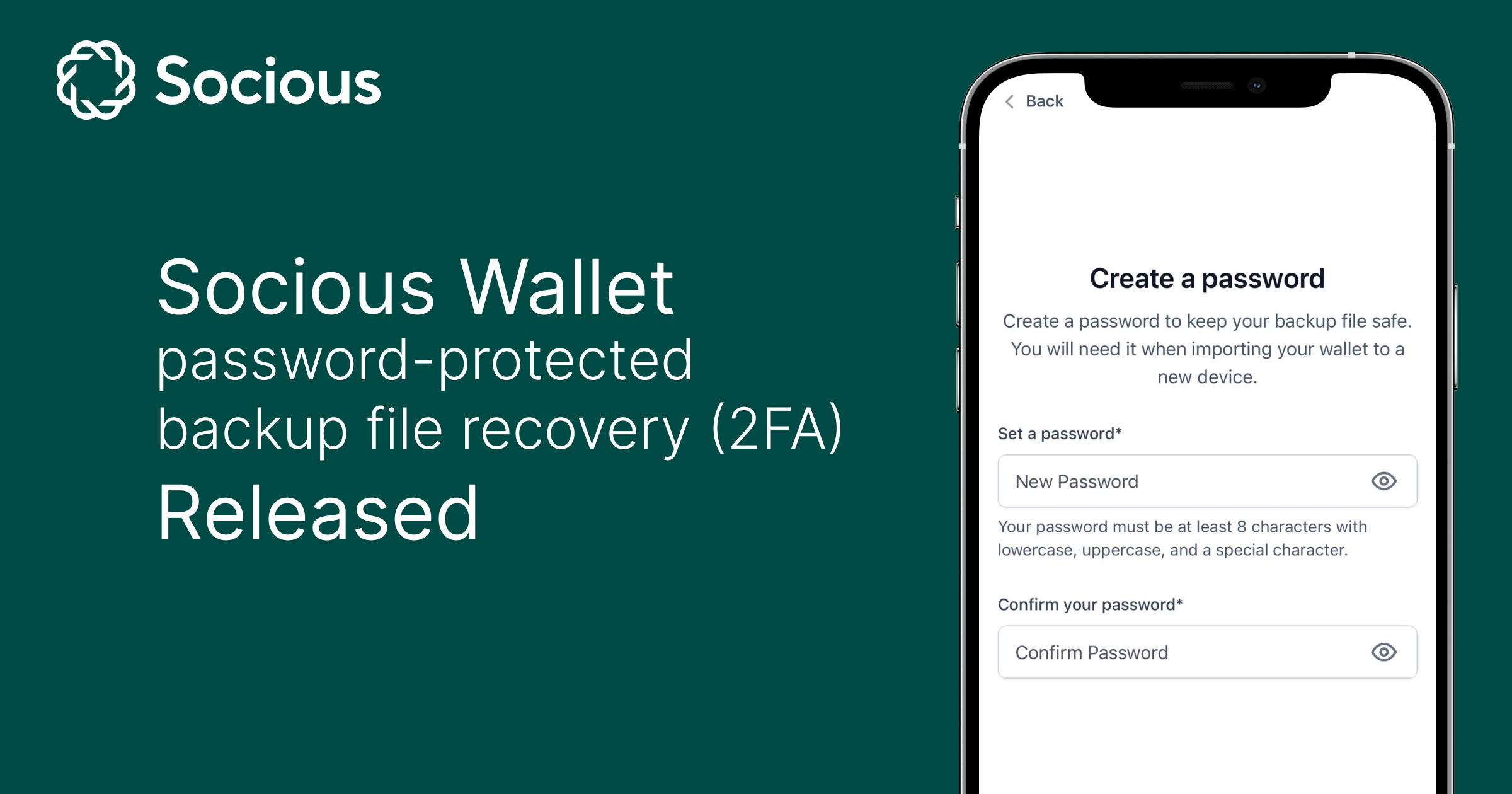
Socious Wallet supports wallet recovery via password-protected backup files, enhancing security and usability, eliminating the need for seed phrases.
The Tech4Good Scholarship by Socious and Le Wagon empowers Claudia to pursue UI/UX design, combining tech skills with her mission for social impact.
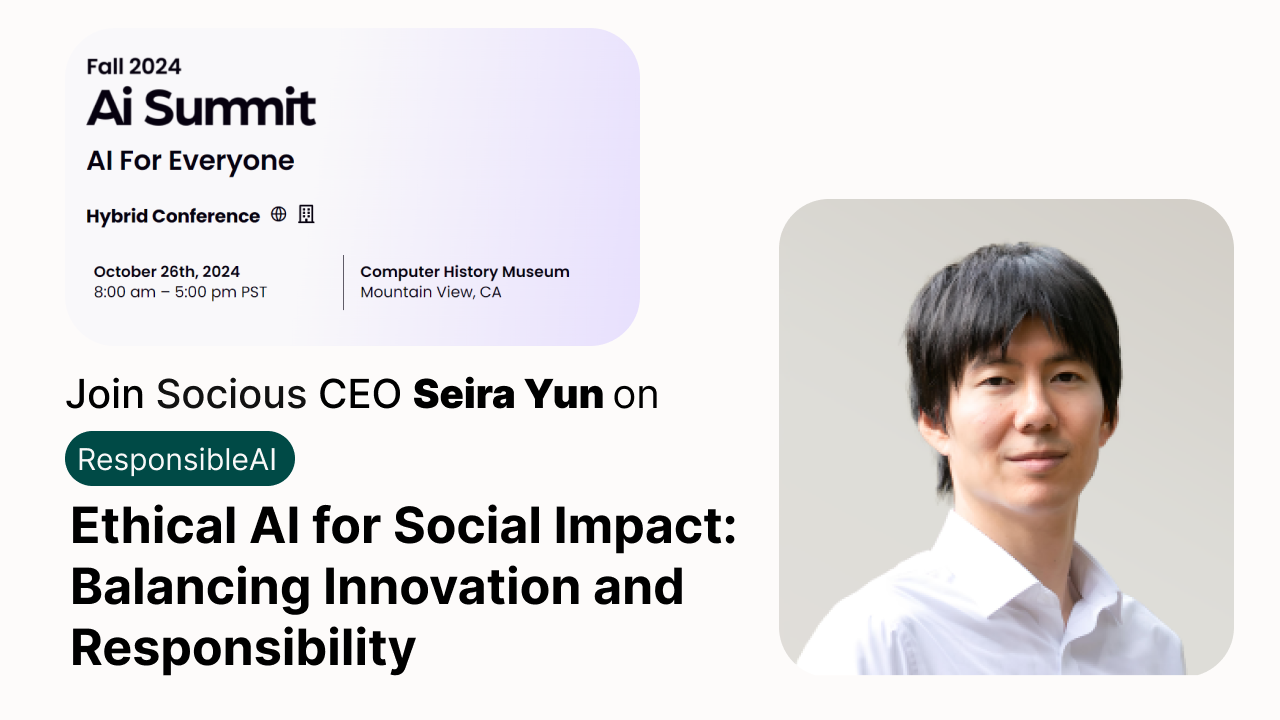
At the AI Summit 2024, Socious CEO Seira Yun will present insights on ethical considerations that should guide AI development, emphasizing how these principles can lead to fair and accountable AI-driven initiatives.
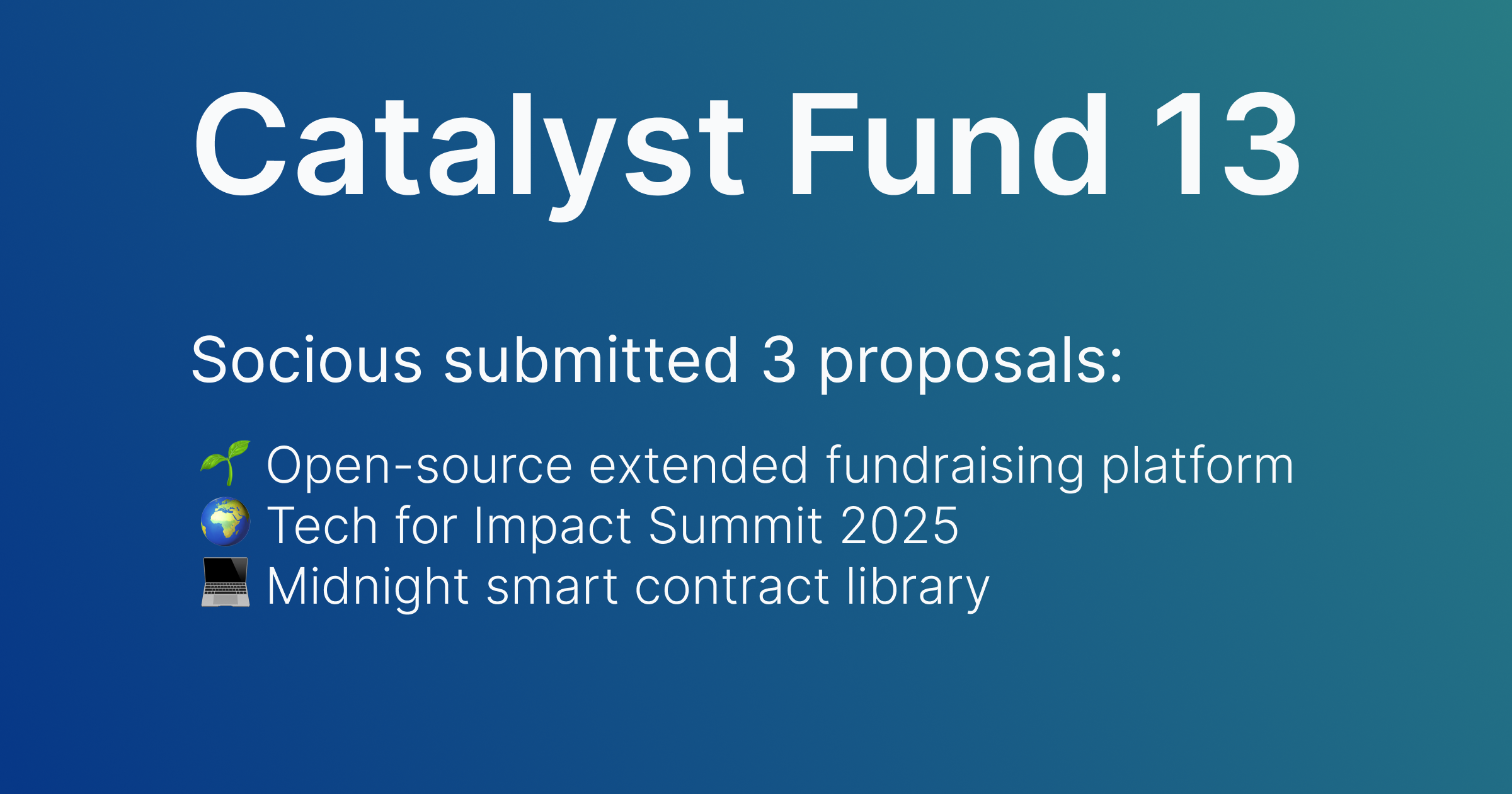
Socious has submitted three innovative proposals to Catalyst Fund 13, aiming to advance the Cardano ecosystem and create social impact through funding mechanisms, an international summit, and smart contract development.
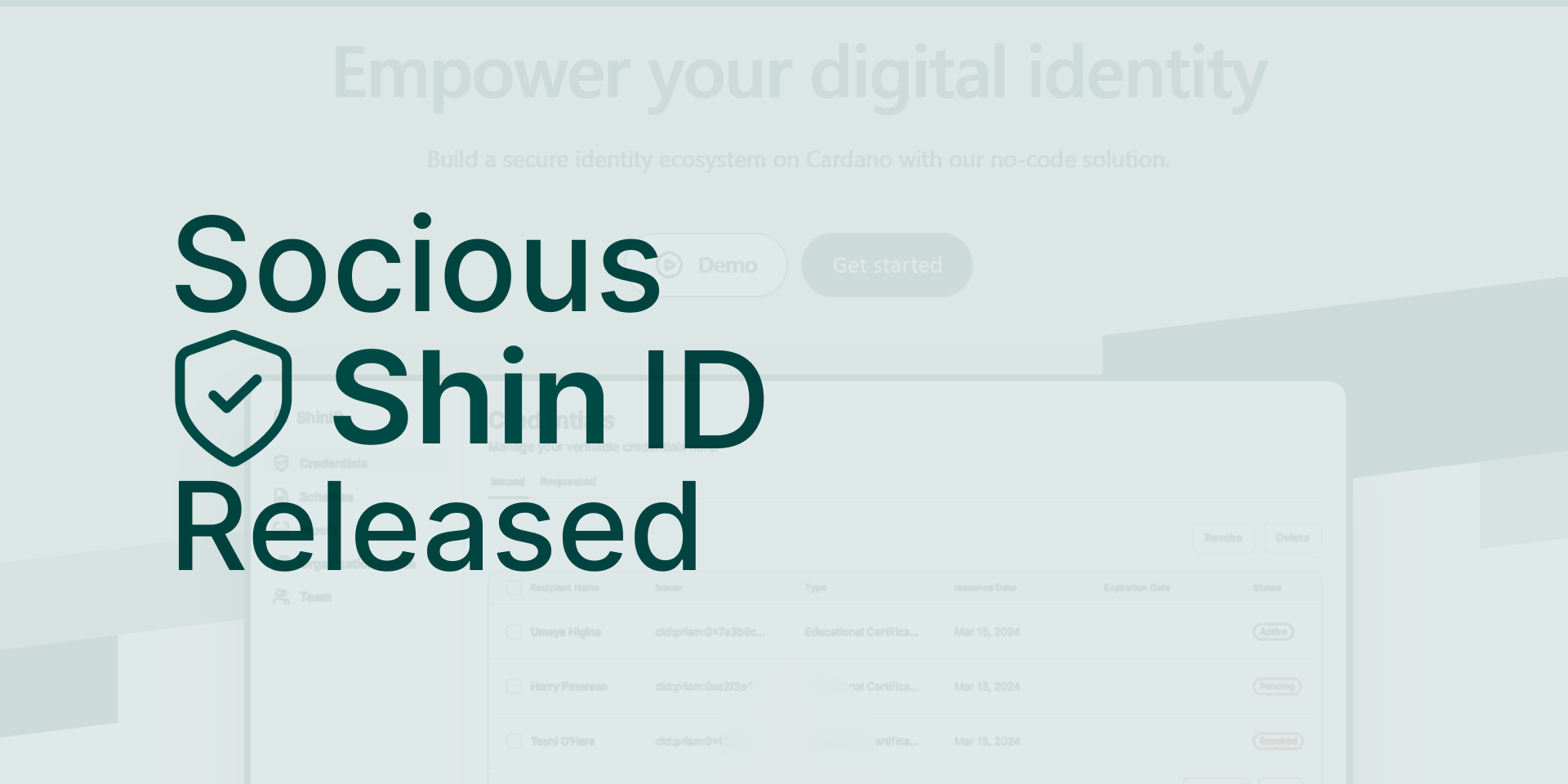
Socious launched the Shin Platform, a groundbreaking digital identity management solution built on the Cardano blockchain.
Socious announced the Japanese translation of Midnight's whitepaper, a fourth-generation blockchain technology that protects metadata using zero-knowledge proofs while maintaining data utility and ownership.
Seira Yun has been invited to speak at Cardano Summit 2024 in Dubai, sharing insights with blockchain enthusiasts from around the world during a two-day event.
Cardano's ICC candidates participate in community-organized debates in various languages, promoting diversity, equity, and inclusion.
Cardano Japan, representing a coalition of five Cardano Ambassadors, announces their candidacy for the Interim Constitutional Committee.
Socious's CEO, Seira Yun, was awarded CEO Monthly's Most Influential Leader in Kanto, honoring his exceptional leadership and innovative vision at Socious.
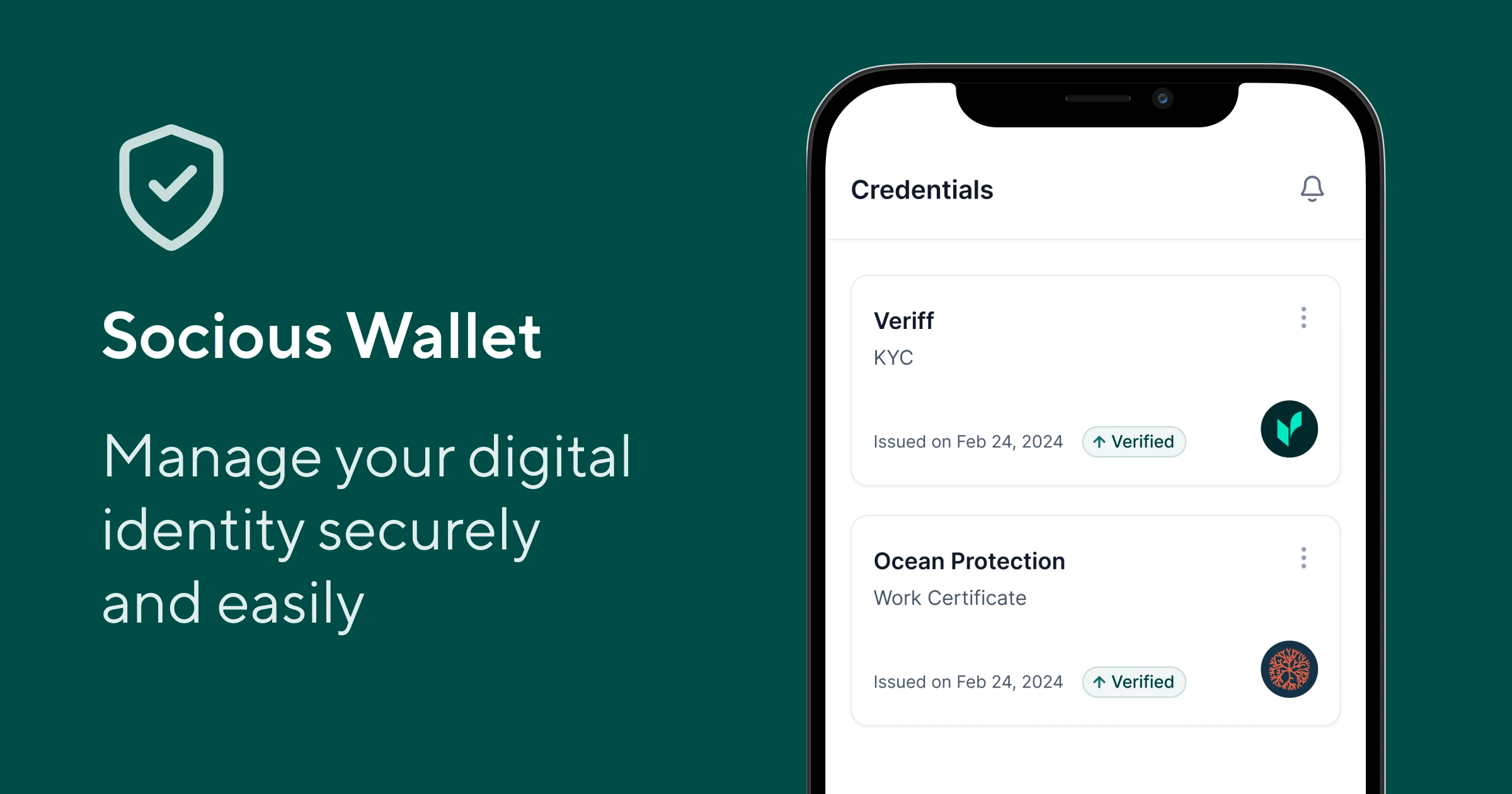
Learn how Socious' new product release allows users to claim and securely store digital and verifiable certificates for their work.
An innovative identity wallet designed to operate on the principles of Self-Sovereign Identity (SSI), transforming how users manage digital identity with security and seamless platform integration.
Explore 30 innovative AI companies driving positive societal change through technology in healthcare, environment, education, safety, and more.
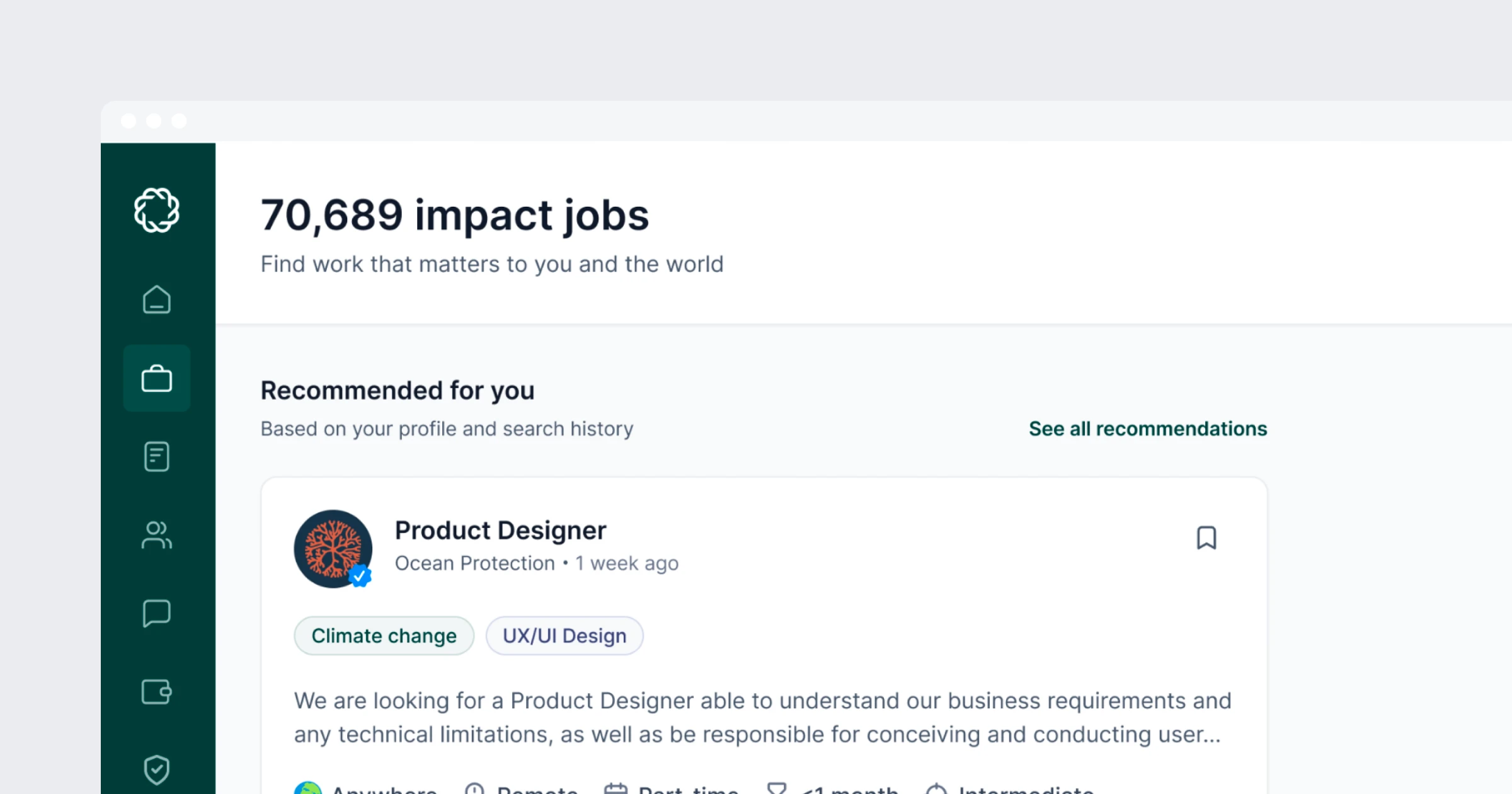
Discover how Socious's AI-powered job matching tool connects passionate talent with impactful careers, revolutionizing the job search for social good.
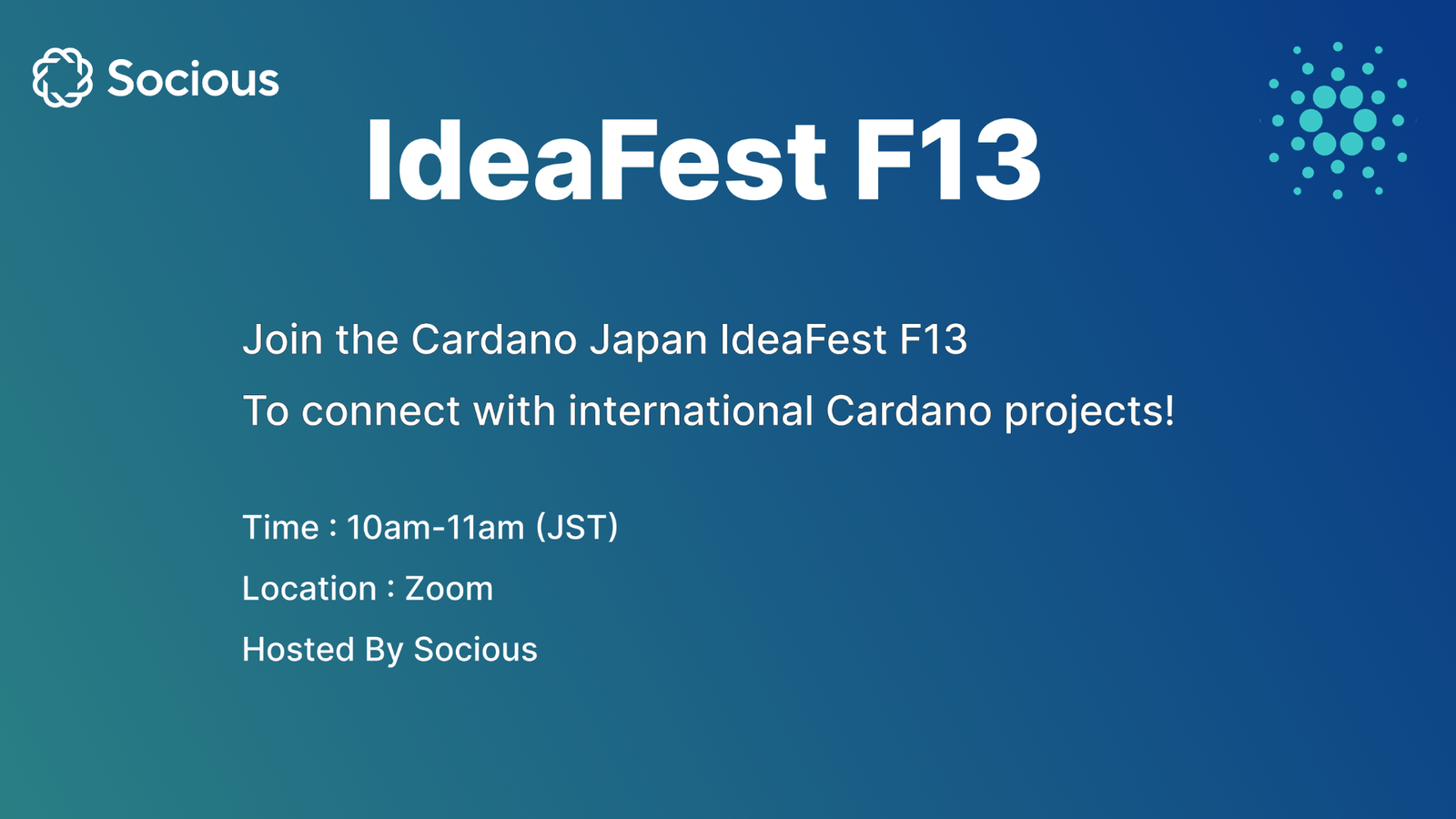
Join the Cardano Japan IdeaFest F12 to connect with international Cardano projects through bilingual pitch events.
Discover 30 innovative blockchain companies driving positive change in sectors including healthcare, education, and environmental conservation.
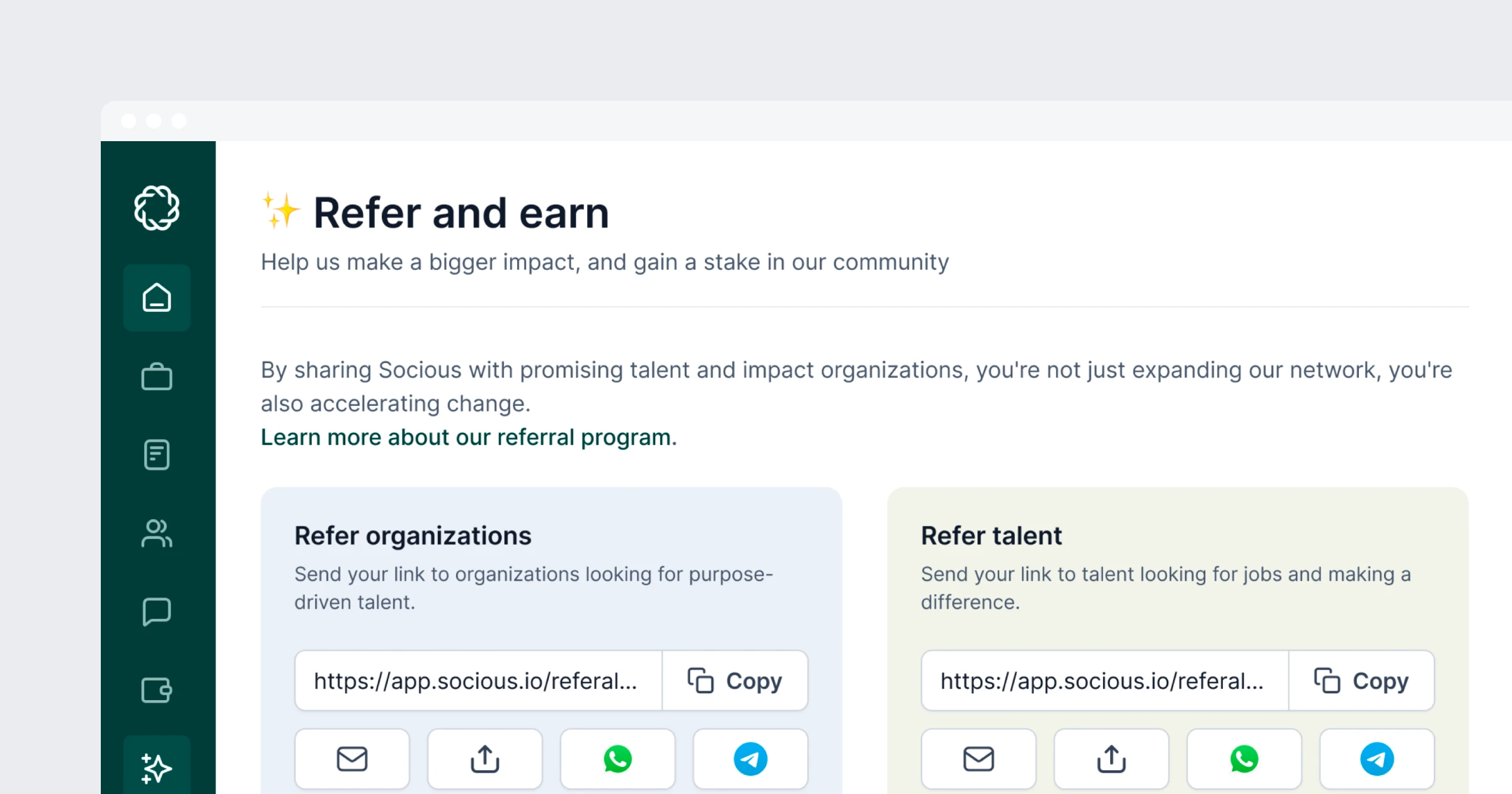
Socious introduces a blockchain-based decentralized referral system designed to combat referral fraud and create a secure, transparent referral ecosystem for DAOs.
The SEC's Final Rule mandates climate-related disclosures for public companies. This comprehensive guide breaks down the new requirements into actionable steps to help organizations achieve compliance excellence with SEC regulations.
Socious introduces a new identity wallet using Self-Sovereign Identity (SSI) and invites users to join its beta testing program.
Learn how embracing unique strengths can drive innovation, resilience, and inclusion in the workplace.
The new European Corporate Sustainability Reporting Directive (CSRD) calls for corporate responsibility toward environmental and social impacts.
Adopting SSI over SBT in credential management offers benefits like improved privacy, interoperability, and cost-effectiveness.
Socious hosts a three-session online event exploring Impact Weighted Accounts (IWAs), a methodology that quantifies social and environmental business impacts in financial terms.
ESRS G1, a pivotal framework in corporate governance and sustainability reporting, outlines crucial requirements for companies' business conduct.
Join Round 2 of Tarochi for Aizome Retweet Campaign! Support Aizome's heritage with a retweet. Win ADA prizes and NFTs.
Learn to create impactful job descriptions with engaging and SEO-aligned titles to attract the right talent.
The European Sustainability Reporting Standards (ESRS) Social Requirements (ESRS S1-S4) guide companies toward ethical and sustainable practices.
A bilingual pitch event bridging Japan's Cardano community with global projects, featuring presentations from overseas initiatives with real-time interpretation between Japanese and English.
Socious submitted five proposals to Catalyst Fund 11 and received excellent community reviewer ratings averaging 4.3/5. Learn about the proposals and how to support them.
Learn how blockchain and AI can change philanthropy, eliminating intermediaries, ensuring transparency, and accelerating aid delivery.
Explore how the ESRS Environment Requirements framework details five critical environmental disclosure areas that foster transparency and align with EU sustainability goals.
Imagine a world where every act of kindness, every dollar donated, every step towards a better future is documented and verifiable, building trust and empowering positive change.
The European Sustainability Reporting Standards Cross-Cutting Requirements (ESRS 1 and ESRS 2) set the fundamentals for transparent impact reporting.
A guide on key impact investors, their preferences and investment stages, aiding startups and investors.
Companies that attract mission-driven workers build stronger teams. Gen Z expects purpose from employers — it's become competitive in hiring.
Socious celebrates a transformative 2023 marked by over 130 successful matches, 30,000+ hours contributed to social causes, and strategic funding milestones.
A collaborative initiative combining blockchain gaming with Japanese cultural heritage preservation. Players of Paima's Tarochi game can earn cryptocurrency rewards while contributing to preserving traditional indigo dyeing techniques.
An examination of how technology conferences gathering thousands of professionals in AI, blockchain, and quantum computing could better serve broader social good rather than purely commercial interests.